 Social Media
9 min read
Social Media
9 min read
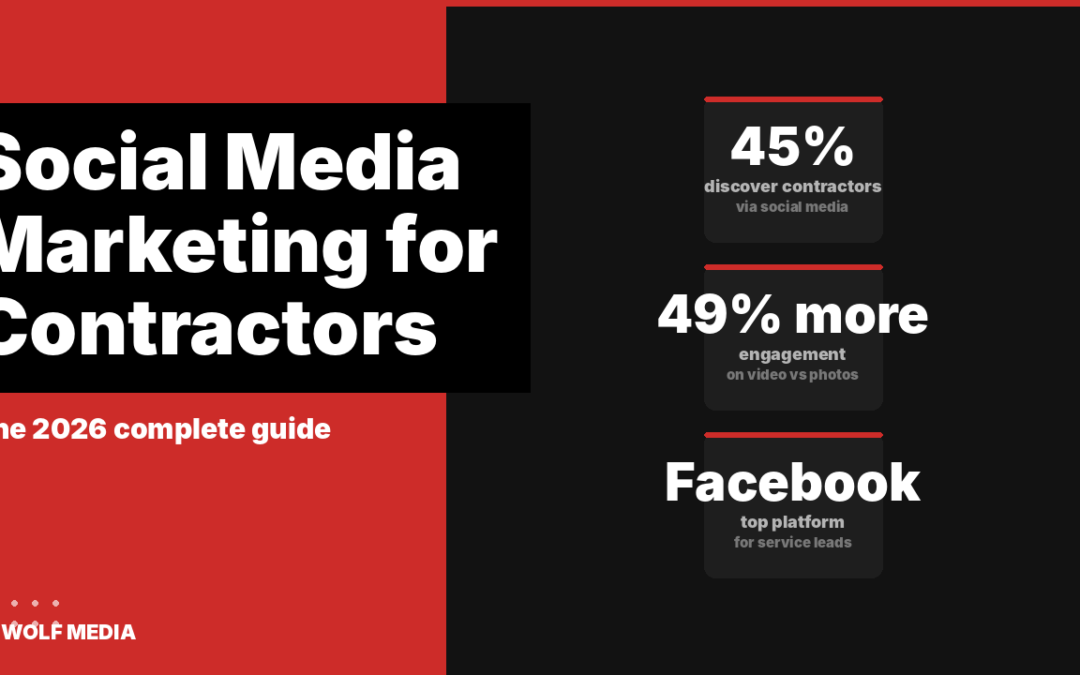
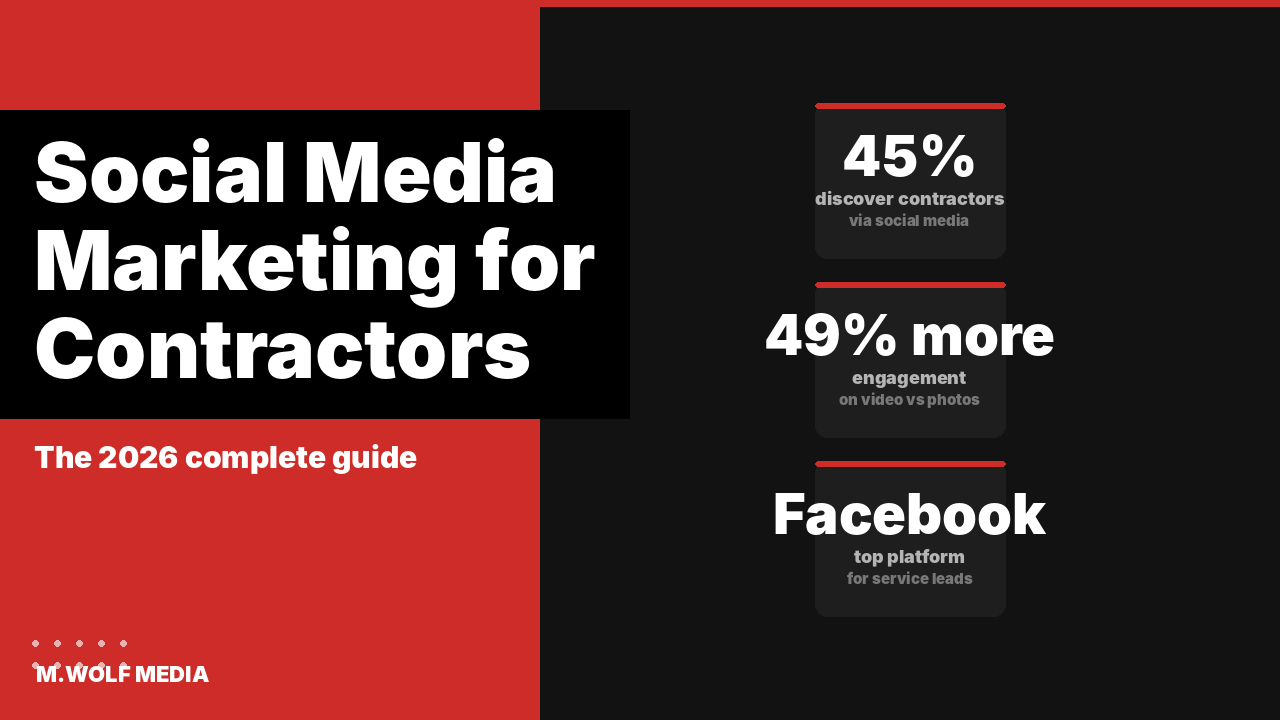
Social Media Marketing for Contractors
Which platforms actually work, what to post, and how to turn followers into booked jobs.

Most contractors treat social media like a chore. They post a project photo every few weeks, wonder why nothing happens, and eventually stop entirely.
The contractors killing it on social are doing three things differently: they are posting consistently on the right platforms, they are leading with content that builds trust instead of content that just shows their work, and they are spending a small amount of money to amplify what is already working.
This guide covers exactly how to do all three. No vague advice about "telling your story." Concrete platform choices, content types that drive calls, and a simple system you can run without a marketing degree.
Part 1: Which platforms are actually worth your time
Every platform promises reach. Not every platform delivers leads for home service contractors. Here is the honest breakdown.
Facebook: still the best platform for local contractors
Facebook's targeting and local community features make it the highest-ROI platform for home services. The average homeowner in your service area is between 35 and 60 years old, homeowner, has money to spend, and is actively using Facebook. That is your customer. The algorithm still rewards local business content and personal recommendations in a way that Instagram and TikTok do not.
What works on Facebook:
- Before-and-after project photos with a short story in the caption (neighborhood name helps)
- 5-star review screenshots with a brief note about the job
- Short videos (60 to 90 seconds) showing the work process
- Response to local neighborhood groups (join 3 to 5 groups in your service area)
Instagram: great for visual trades, optional for the rest
If your work is highly visual (landscape design, custom decks, interior remodeling, pool installs) Instagram is worth maintaining. The photo and Reels format rewards quality work photography in a way Facebook does not.
If your trade is less photogenic (HVAC, electrical, plumbing rough-in) Instagram is harder to justify without a dedicated content strategy. Your time is better spent on Facebook and Google.
YouTube: long-term asset, slow burn
YouTube is the second-largest search engine. A well-filmed "how to know when your roof needs replacement" video can drive organic views for years. The problem is production time. This is worth investing in if you have someone who can film and edit consistently. It is not worth doing halfway.
TikTok: younger audience, wrong demographic for most trades
TikTok has enormous reach, but the core audience skews 18 to 34 and rents rather than owns. Unless you are targeting a very specific niche (first-time homeowners, DIY-to-hire crossover content) TikTok will get you views and very few leads. The exception: trades with a strong entertainment angle like custom metalwork, high-end landscaping, or dramatic renovation reveals.
The recommended starting stack
For most contractors, start here and do it well before adding anything else:
- Facebook Business Page posting 3 to 5 times per week
- Facebook community groups as a member, not a spammer
- Instagram cross-posting your best Facebook content (5 minutes of extra work)
That is it. Three channels, one content strategy. You can add YouTube once you have the Facebook system running.
Part 2: What to post (and what not to post)
The biggest mistake contractors make is posting content that says "look how good we are" instead of content that makes the homeowner feel something. Here are the formats that consistently drive engagement and leads.
Before and after: the highest-performing format in home services
Nothing outperforms a clean before-and-after post. Homeowners want to see transformation. They want to imagine their own yard, roof, or bathroom looking like that. A strong before-and-after post includes:
- A genuine "before" photo (not embarrassingly bad, just clearly unfinished)
- A sharp, well-lit "after" shot taken at the best angle
- A caption that mentions the city or neighborhood, the scope of work, and a one-line note about the client result
- A soft call to action: "DM us or call [phone] for a free quote in [city]"
Reviews and social proof: let your customers do the talking
Screenshot your 5-star Google reviews and post them with a short comment. Something like: "Another great review from a [city] homeowner. This is why we do what we do." This format performs because it combines visual proof with community validation. It also signals to Facebook's algorithm that real people trust you.
Short-form video: the fastest way to grow reach in 2026
You do not need a production crew. A 60-second phone video shot on-site outperforms most polished agency content because it feels real. The best formats for contractors:
- Time-lapse or fast-forward: one hour of work compressed to 30 seconds
- "What we found" reveals: "We opened up this wall and found..." (massive engagement)
- Quick tip videos: "3 signs your [system] needs replacing soon" (search-friendly on YouTube too)
- Project completion walkthrough: a 60-second tour of the finished job
Behind-the-scenes and team content
Photos of your crew, your truck, your shop, your process. Homeowners are inviting you into their home. They want to know who you are. A photo of your team at a job site with a genuine caption gets strong engagement and builds the trust that turns a social follower into a paying customer.
What not to post
Avoid generic stock photos, corporate-sounding captions, and posts that exist just to fill a calendar. The algorithm punishes low-engagement posts by reducing your reach, so one strong post per week beats seven weak ones. Also avoid sharing news articles, political content, or anything unrelated to your trade and service area. Stay on topic.
A simple weekly content calendar
| Day | Post type | Time required |
|---|---|---|
| Monday | Before/after project from last week | 10 min |
| Wednesday | Review screenshot + caption | 5 min |
| Friday | Short video or team photo | 15 min |
That is three posts per week, about 30 minutes of work total. Consistent execution of this alone will outperform 90% of contractor social media accounts in your market.
Part 3: Turning social followers into booked jobs
Organic reach will get you visibility. Converting that visibility into leads requires a few deliberate systems.
Respond to every comment and DM within one hour
This is the most underrated lead-gen tactic on social media. When someone comments "how much would this cost?" or "do you work in [neighborhood]?" they are a hot lead. Respond fast with a genuine answer and a soft next step: "Prices vary by scope but most [project type] in the $X to $Y range. Want me to give you a free quote? DM me your address and I will pull up a number for you."
Facebook and Instagram both measure your response rate and response time. Fast responders get boosted in the algorithm.
Boost your best posts instead of running cold ads
This is where most contractors go wrong with paid social. They run polished ad campaigns to cold audiences and wonder why the cost per lead is $80 or $100. A better approach: post organically first, wait 24 to 48 hours, identify the post that is getting the most organic engagement, and then boost that post with $5 to $20 per day to a local homeowner audience.
You are not starting from zero. You are amplifying something that is already proving itself. This consistently produces leads at $18 to $45 per lead for most contractor trades.
Use Facebook Lead Ads for direct lead capture
Facebook Lead Ads let users submit their name, email, and phone number without leaving the platform. For contractors, these work best as a specific offer: "Free roof inspection this month," "Get a landscaping quote in 48 hours," or "Schedule your AC tune-up before summer." Set a daily budget of $10 to $30 and target homeowners within your service radius by age (35 to 65), homeownership status, and interest in relevant topics.
Set up your Facebook Business Page correctly
Before spending a dollar on paid reach, make sure your page is optimized:
- Category: set to your exact trade (General Contractor, Roofing Contractor, Landscaping, etc.)
- Service area: fill in every city you serve
- Hours and phone: current and correct
- Call to action button: set to "Call Now" or "Send Message"
- Reviews tab: visible and showing your best ratings
- Cover photo: a before/after or your crew on a job site, not a logo on white
A complete, optimized page converts 2 to 3 times better than a sparse one. It takes 30 minutes to set up correctly and pays dividends for years.
Link every social profile to a high-converting landing page
Your Instagram bio, Facebook page, and any link in your content should point to a page built to capture leads, not your homepage. Ideally a single-focus page with a short form, proof (reviews and project photos), and one clear offer. If you are running any kind of ad spend alongside your organic efforts, this alone will cut your cost per lead significantly.
Free: Contractor Social Media Starter Kit
Everything you need to launch or fix your campaign this week.
- 30-day content calendar with post prompts for any trade
- Before/after caption templates (5 plug-and-play versions)
- Facebook boost checklist (audience targeting, budget, duration)
- Page setup audit: 12 things to fix before running any paid reach
Frequently asked questions
How many times per week should a contractor post on social media?
A minimum of 3 posts per week is the threshold most contractors need to maintain algorithm visibility. 5 posts per week is ideal if you can maintain quality. Consistency matters more than volume. Sporadic posting at high frequency followed by long gaps hurts your reach more than a steady 3-per-week rhythm.
Is Facebook or Instagram better for contractors?
Facebook outperforms Instagram for most contractor trades because the homeowner demographic (35 to 65, owns a home, has household income to hire services) is more active on Facebook. Instagram is worth using if your work is highly visual and you are targeting a younger homeowner audience. For most trades, cross-post your Facebook content to Instagram with minimal extra effort.
How much should I spend boosting posts on Facebook?
Start with $5 to $10 per day on your best-performing organic post from the previous week. Run it for 5 to 7 days, targeting homeowners within your service area. Evaluate cost per lead or cost per click. Once you find a post type that consistently performs, increase the budget. Most contractors see diminishing returns above $50/day until their funnel (landing page, follow-up) is dialed in.
Do I need a professional photographer for contractor social media?
No. A modern smartphone camera shoots well enough for Facebook and Instagram. What matters more than camera quality is lighting (shoot during golden hour or in open shade), composition (get the full project in frame, clear before/after angles), and consistency. Hire a photographer once per quarter to build a content library if budget allows, but do not let the lack of one stop you from posting.
How long does it take to see leads from social media?
Organic social is a 60 to 90 day game for most contractors. The first month builds the content foundation and algorithm trust. The second month is when engagement starts to compound. Paid boosting can accelerate this to 2 to 4 weeks for consistent lead flow. Anyone promising overnight results from organic social alone is overstating what is realistic.
Should I hire a social media manager for my contracting business?
It depends on your time and your business stage. If you are doing less than $500K per year in revenue, handle it yourself with a simple 3-post-per-week system and a $5 to $20/day boost budget. Above that level, the ROI of hiring a part-time social media manager or agency typically justifies the cost, especially if you are running paid ads alongside organic content.
Keep reading
Ready to get more leads from Google?
Tell us about your current setup and we will show you exactly where to start.
Grab the Social Media Starter Kit
Caption templates, a 30-day content calendar, and a Facebook boost checklist built for contractors.
No spam. Unsubscribe anytime.
Which platform are you currently using for your contracting business?
What is your biggest challenge with social media right now?
Last step. Where should we send your free audit?